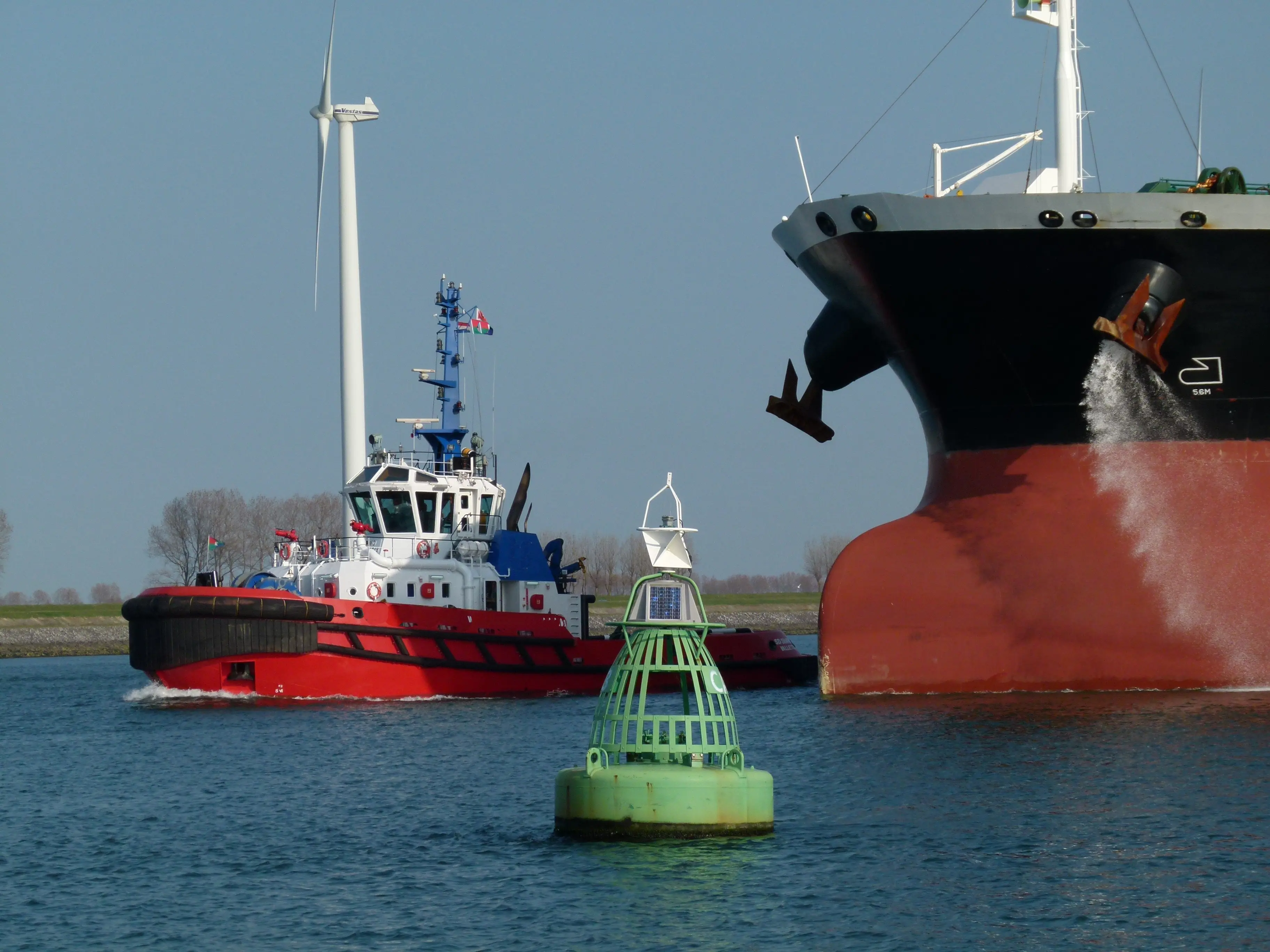

A port call, also known as a vessel call, is a ship's scheduled visit to a port to carry out operational activities that cannot, or are difficult to, perform at sea. These activities include loading and unloading containers or bulk cargo, bunkering (refuelling), provisioning the vessel, crew changes, and carrying out inspections and repairs.
A port call is therefore a complex logistical process that requires careful coordination between multiple activities and service providers. The objective is to guide the vessel through the port as efficiently, safely and cost-effectively as possible, while ensuring that all required operations are completed within the available timeframe.
Why is a standard ERP system not sufficient to manage this process?
Standard ERP systems are generally designed to support business processes within a single organisation. These typically involve relatively predictable processes, such as production, inventory management, financial administration and procurement. Such processes rely on fixed master data, clearly defined responsibilities and largely controllable information flows.
A port call, however, is fundamentally different. The process takes place within a network of multiple organisations, where external circumstances and constantly changing schedules play a significant role. This creates several challenges that do not always align with the standard functionality of an ERP system.
Constantly changing arrival and departure times
One of the defining characteristics of a port call is that schedules are subject to continuous change. A vessel's expected arrival time, known as the Estimated Time of Arrival (ETA), may change during its voyage due to weather conditions, sailing speed, traffic congestion or other operational factors.
These changes have an immediate impact on the schedules of all parties involved. For example, a revised ETA or Estimated Time of Departure (ETD) may require a pilot, tugboat or terminal crew to be available at a different time.
Port call schedules may therefore need to be adjusted on an hourly or even 15-minute basis. Standard ERP systems are generally less suited to these types of real-time scheduling requirements, where changes must be communicated and translated into updated schedules for dozens of external parties almost immediately.
Fragmented data exchange
Another major challenge is that the parties involved often work with different information systems. These may include Port Community Systems, proprietary planning systems, supplier portals, email and telephone communications.
This results in fragmented information, with data distributed across multiple systems and organisations. As a result, there is often no single, centralised and up-to-date overview of the entire port call.
In addition, key operational events, such as the vessel's actual arrival at the berth (Actual Time of Berth) and its actual departure time (Actual Time of Departure), must be accurately recorded and shared with the relevant parties.
Complex cost and revenue allocation
In addition to its operational complexity, a port call also involves challenging financial administration. During a single port call, dozens of individual services are often procured from different local suppliers.
These costs are frequently variable and depend on the services actually performed, the duration of the vessel's stay and the specific circumstances of the port call. Furthermore, invoices are often received only after the port call has been completed, and amounts may be submitted in different currencies.
Within the shipping industry, the financial settlement of these costs is commonly referred to as the Disbursement Account (DA) process. This involves collecting, verifying and ultimately settling all costs incurred on behalf of the shipowner or vessel.
This approach differs significantly from the traditional Procure-to-Pay (P2P) processes for which standard ERP systems are designed. Consequently, it can be difficult to automatically allocate all costs to the correct port call, vessel, cargo and associated client.
The solution: Flex Maritime Logistics
To address these challenges, Ultimate Maritime Logistics has developed Flex Maritime Logistics, a specialised solution based on Microsoft Dynamics 365 Finance & Operations.
Flex Maritime Logistics enables maritime logistics companies and organisations to manage the entire port call process and ensure that all operational, administrative and financial activities are recorded completely, accurately and on time.
The solution brings together all relevant processes, stakeholders, activities, costs and revenues associated with a port call within one integrated environment. This provides a real-time, reliable overview of the entire port call and enables organisations to effectively manage both operational execution and financial settlement.
Flex Maritime Logistics delivers control, transparency and financial oversight across the entire port call process.
This clearly demonstrates why additional maritime software, specialised port call solutions and integrations between different systems are essential.
The challenge is not simply to digitise individual activities, but rather to create one integrated process in which all operational, administrative and financial information relating to a port call is connected within a single point of truth.